

The proposed October Jinx Uranium Project is part of the Chord Project. The Chord Project is composed of 3,677 acres in the Craven Canyon area in the southern Black Hills.
Read more
This area had exploration drilling in the 1970s and is a world-class cultural resources site. Union Carbide Corp. started mining in Craven Canyon without getting a state mining permit in 1979 and was stopped by legal action by the Black Hills Alliance (BHA), a regional nonprofit group at that time. This mining was stopped because a local citizen noticed the movement of large equipment into the area and called the BHA. Now, we must move fast to protect this sacred landscape.
The company that has asked for a permit for the October Jinx Project is “Clean” Nuclear Energy Corp. (CNEC), a subsiderary of Nexus Uranium Corp. (Nexus) of Canada. On September 16, 2025, Nexus acquired Basin Uranium Corp., a previous involved company, consolidating the U.S. portfolio under Nexus and continuing permitting at the Chord Project through CNEC. These 3,677 acres, located in Fall River County, straddle state and federal lands.
IMPORTANT UPDATE:
The Comment period for the October Jinx uranium project ended on March 3.
Over 924 public comments were submitted to the Forest Service, with the majority against permitting the October Jinx uranium project!
Thank you to everyone in the Black Hills region and beyond—communities, Tribal Nations, and our ally organizations, including Honor the Earth, NDN Collective, Dakota Rural Action, Haul No!, Protect Piedmont’s Future, and Water Protectors Legal Collective. We are stronger together!
If you’re interested, public comments are available in the Forest Service Reading Room. here: https://cara.fs2c.usda.gov/Public/ReadingRoom?Project=67625
SECOND URANIUM EXPLORATION PROJECT THREATENS CRAVEN CANYON
COMMENT PERIOD – FEBRUARY 2 – MARCH 3, 2026.
A Canadian company has applied for a second time to explore for radioactive uranium at Craven Canyon in the southern Black Hills. This project is named the October Jinx Project, which is on federal land. It is part of the larger Chord Project. The company is named Clean Nuclear Energy Corporation (CNEC), which is a subsidiary of Nexus Uranium. (Note that nothing about nuclear energy is “clean,” including uranium drilling and mining.)
The U.S. Forest Service has requested public comments on this proposed project, with a due date of March 3, 2026, 11:59 pm (Mountain).
What’s so special about Craven Canyon?
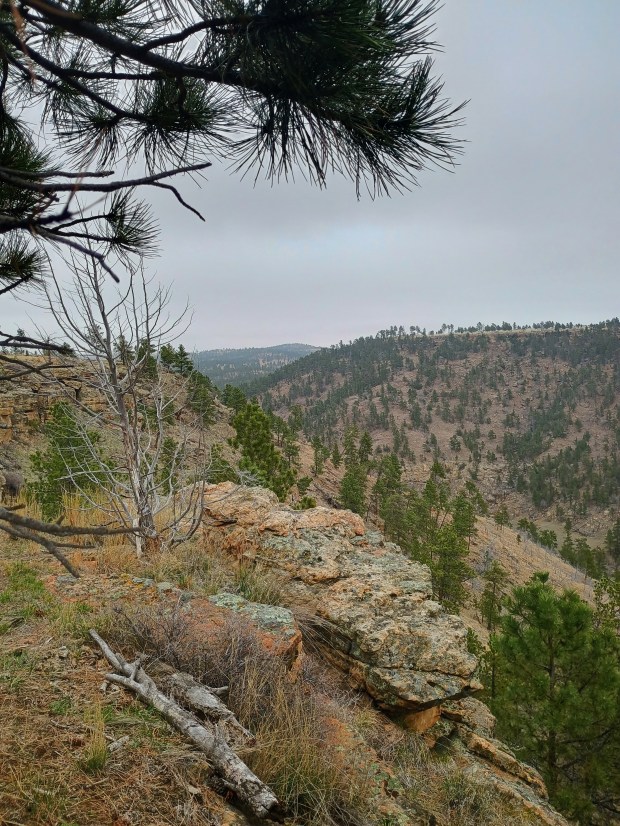
Craven Canyon is a world-class cultural and historic site. It contains rock art and other artifacts that are 7,000+ years old. Many artifacts and sites of interest have been found in and around the Canyon, where people gather for ceremony and study. The October Jinx project would involve 17 drill pads with drilling depths down to 700 feet. Each drill site would use 5,000 to 10,000 gallons of water per day.
What are some potential impacts of the October Jinx Project?
As the U.S. Forest Service said in 2011, “…there is potential for damage of the unique values associated with this area from future mining activities.” ~ Environmental Assessment, Craven Canyon Mineral Withdrawal, June 2011, Page 10, Purpose and Need for Action. (NOTE: This mineral withdrawal was not approved. However, this Environmental Assessment (EA) has important information that might be used in your comment. If you do use any of the information from this EA, remember to cite that information with the page number, and attached the document to your comment.)
In addition to the importance of Craven Canyon, here are some of the things you might want to comment on (but use your own words and pick the topics that are important to you). We have provide you with some talking points:
Click here Talking Points. Address one or more of these Talking Points in your comments. Use your own words – Don’t just copy and paste this information.
- Drilling activities would be seen and heard throughout the area, These would include noise, traffic, and visual impacts which would disturb ceremony, study, wildlife, recreation, and historical sites.
- Uranium exploration drives off wildlife and can cause radioactive and toxic contamination of water and land.
- The company plans to drill directly into an aquifer and may drill 24 hours a day, creating noise, lights, and traffic.
- The company wants to put drilling wastes – which could be radioactive and toxic – into 17 unlined pits.
- The October Jinx project would also include pumping 130,000 gallons of water into a four-foot-deep, unlined 50’ x 50’ discharge pit.
- Pumping activities would also move water between drill holes to test the aquifer. This could push contamination from one part of the aquifer to another.
- Heavy water trucks and drilling equipment would be transported off roads, creating 1.3 miles of what the company calls “overland travel.”
- The area is dry and slow to recover from drilling and heavy equipment operation, making true reclamation difficult to impossible. Disturbance from drilling in the 1950s – 1970s is clearly visible in the area.
- The company says that the October Jinx Project would take 2 months. The Forest Service’s recent paperwork says that it would authorize the project for 1 year. But the company’s application (Plan of Operations) says that the project would be approved until December 15, 2029.
- The company’s application does not mention that world-class cultural and archeological resources would be impacted. In fact, it does not mention them at all.
- Because of the extraordinary circumstances, the Forest Service should do a full Environmental Impact Statement for the October Jinx Project, not just let it go ahead as the government has proposed.
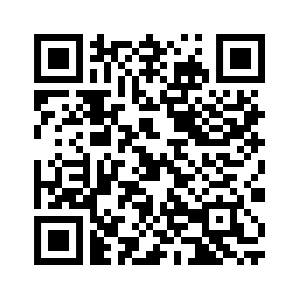
Comment on this proposed project: Go to https://cara.fs2c.usda.gov/Public/CommentInput?Project=67625 or use the QR code.
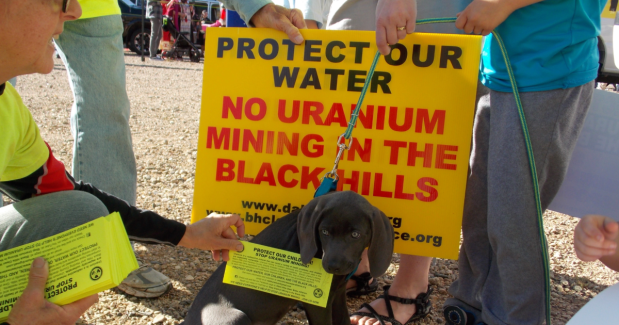
Tell them who you are, where you’re from, and why you care about protecting the Craven Canyon area. Use your own words. The Canyon is truly extraordinary.
SUBMIT YOUR COMMENTS TO THE FOREST SERVICE BY MARCH 3, 2026.
Forest Service’s Portal to Comment/Object on Project @ https://cara.fs2c.usda.gov/Public/CommentInput?Project=67625
Public Comment/Objection Reading Room @ https://cara.fs2c.usda.gov/Public/ReadingRoom?Project=67625
Click the following to review the Forest Service folders/documents for this Project #67625: https://www.fs.usda.gov/r02/blackhills/projects/67625
Click Here to review the Public Scoping information provided by the U.S. Forest Service for this project.
Click Here for the October Jinx Project’s Plan of Operations (POO) submitted by CNEC to USDA, Forest Service for Mining Activities on National Forest System Lands.
View October Jinx’s Plan of Operations submitted to the U.S. Forest Service and to the South Dakota’s Department of Agriculture and Natural Resouces – click here.
Click here for link to the SD DANR Minerals and Mining page for more information about these two uranium exploration projects.
https://danr.sd.gov/Environment/MineralsMining/Exploration/NewEXNIS.aspx
Follow us on Social Media
 Black Hills Clean Water Alliance