
Last night, NDN Collective, Black Hills Clean Water Alliance, and Earthworks filed a lawsuit against the U.S. Forest Service for their decision in February to grant a permit for exploratory drilling at Pe’ Sla, a sacred and protected Indigenous site.
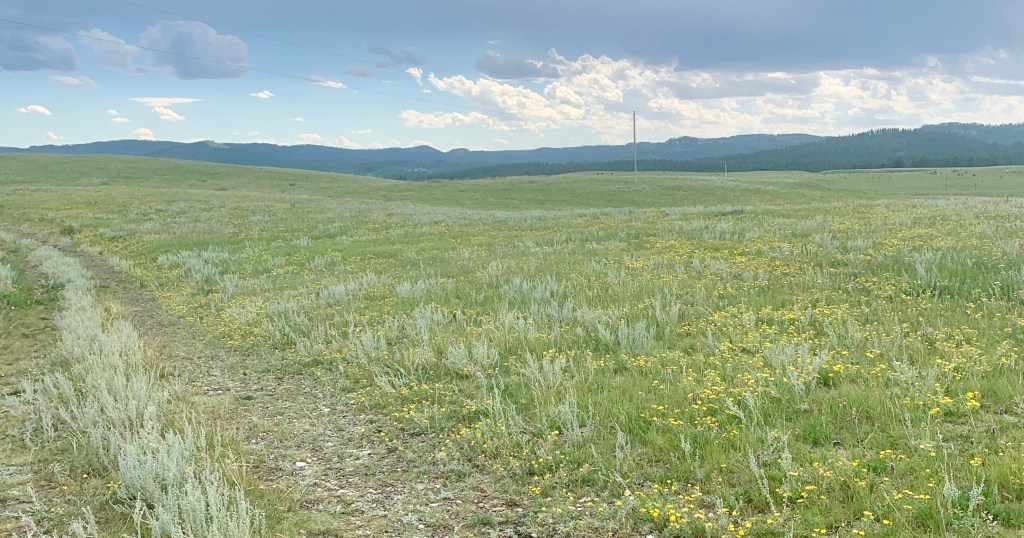
The lawsuit is partly based on the Forest Service’s use of a “categorical exclusion” (CE) for this project. A CE, which allows a project to go forward without full environmental study, is only okay when a project can be completed within one year. A CE is not lawful for the proposed graphite project, because that project cannot be completed in less than one year. In fact, it is slated to last at least three years.
This proposed project would negatively impact Pe’ Sla’s religious and cultural uses and could contaminate water in the Rapid Creek watershed. The lawsuit asks the federal court to reverse the Forest Service’s approval for this project and to halt any further activity.
A 2024 Memorandum of Understanding (MOU) between the U.S. Forest Service and representatives of Tribal nations of the Oceti Sakowin (“Seven Council Fires”) acknowledged and agreed that Pe’ Sla is of great cultural and religious importance. The MOU established a 2-mile buffer zone around Pe’ Sla, and the Forest Service committed to protecting that area. So the Forest Service knows the area is of huge importance and needs protection, but issued a permit to drill there anyway, which could lead to large-scale mining.
Black Hills Clean Water Alliance, NDN Collective, and their allies have been working to protect our area’s water and defend Pe’ Sla by stopping the graphite project for over a year – and indigenous peoples have been defending it for far longer. We, our members, and our allies worked to educate and support the over 2200 community members who submitted public comments on the proposed project last spring. The vast majority of those comments opposed the project, but the Forest Service has chosen to ignore all of us and okayed the project anyway.
“In addition to its violation of the rights of the Lakota and other Indigenous peoples, this proposed mining project is in a unique and fragile biological and geological area,” said Dr. Lilias Jarding, Executive Director of the Black Hills Clean Water Alliance. “It is in the Rapid Creek watershed and threatens water for Rapid City, Ellsworth Air Force Base, tribal communities, and ranching operations downstream along the Cheyenne River. Rapid Creek’s water also fills our area’s groundwater sources. It is critical that we take action to protect the surface and ground water that make our lives and our communities possible.”
The graphite mining project is proposed by Pete Lien & Sons, which has a number of operations, including the large mine inside city limits on the west side of Rapid City. This site has had air quality problems for years, which threaten the health and financial well-being of residents of the area. U.S. Securities and Exchange Commission records indicate that the Lien company was acquired by a larger, international firm in 2019. So mining here could provide profits for far-flung stockholders, while – like other mining operations – leaving the Black Hills area with the resulting problems.
Please continue to follow us to stay up to date. Thank you for your continued support.
Follow us on Social Media
 Black Hills Clean Water Alliance